
Event-Day Demand: Market Research Questions for a One-Day Crowd
A festival Saturday is a demand problem measured in hours, not quarters. The research questions are the ones a full launch would ask; only the evidence changes, and much of it is already published.
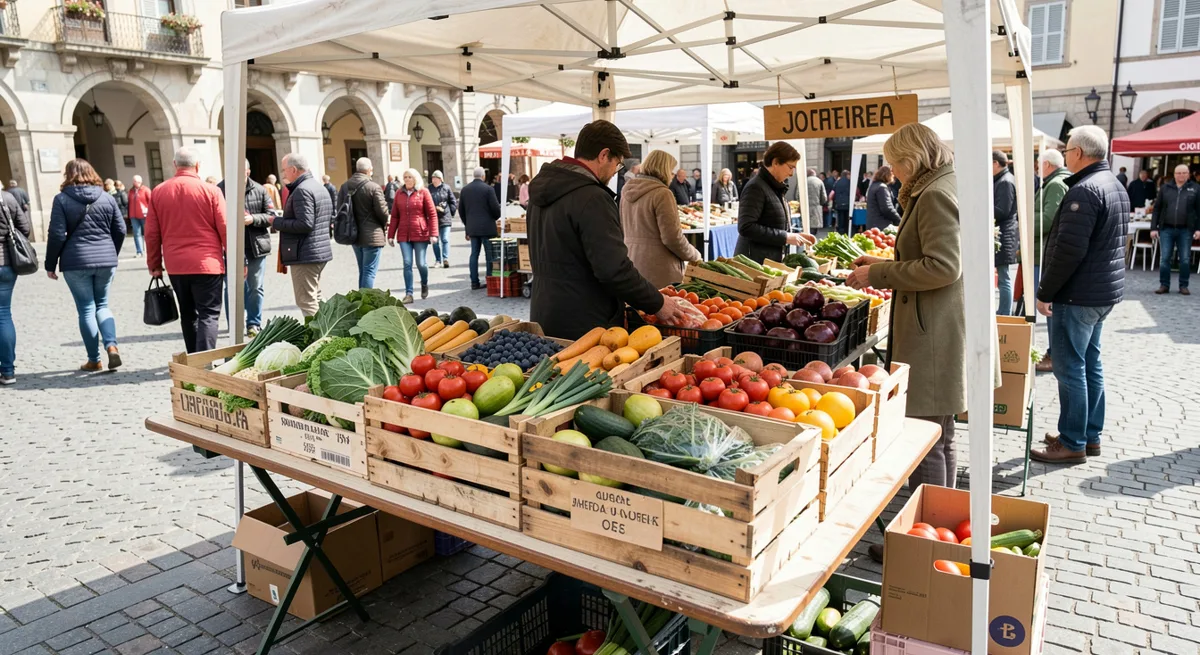
The market-research questions worth asking before a one-day crowd are the same questions a year-round launch would ask, compressed into a shorter evidence file: who attends, why they come, what they already spend money on during the day, and what would make them buy from you. What changes is not the questions but the proof. Nobody commissions a survey program for a single Saturday, so the answers have to come from what the town, the organizer and the venue already publish, plus what can be verified with a phone call or a visit.
The decision itself is small but real: a stall fee, a day of staff time, a load of stock that either sells or comes home. An hour of disciplined reading usually settles whether the day deserves the bet, and it costs nothing compared with guessing wrong.
Which Market-Research Questions Apply to a Single Event Day?
The standard checklist does not shrink just because the timeframe does. The U.S. Small Business Administration’s market research guide tells a business to establish demand, estimate market size, read economic indicators, weigh location and saturation, and price against the competition. Read for a single event day, each question keeps its shape: demand becomes how many attendees are plausible buyers, market size becomes the realistic footfall past your pitch, location becomes where on the route people actually stop, and pricing becomes what comparable vendors charge for comparable goods.
A published example of that compression exists in local-guide form. The Second Street Almanac, a guide to street festivals and public event days in Athens, New York, runs the exercise for its own town: its treatment of event-day market research applies the standard questions to a hypothetical event day and stops at what the town actually publishes, without inventing attendance figures or local businesses. That restraint is the model worth copying.
What Can a Business Confirm From a Town’s Published Event Descriptions?
A municipal calendar tells you what is fixed, not what is guaranteed. An event listed on the same weekend year after year is evidence of a tradition with institutional support; a first-time listing is evidence of intent. Published descriptions usually confirm the date, the setting, the intended audience and sometimes the logistics: road closures, parking notes, whether vendors are curated or open. They rarely confirm attendance, stall fees or application deadlines, and treating an estimate of any of those as published fact is where plans go wrong.
Split what you find into two columns before acting. Confirmed means the town or the organizer published it and you can quote the source. Unconfirmed means a phone call, an email or a site visit, and it stays unconfirmed until someone answers. Event-day research is mostly the discipline of knowing which column a fact belongs to.
How Do You Keep Hypothetical Demand From Becoming False Data?
The recurring failure is a guess that hardens into a number. A plan that says five hundred attendees when the honest range runs from one hundred to a thousand produces stock, staffing and pricing decisions sized to fiction. The fix is unglamorous: write every number with its status. Five hundred, assumed. Two hundred, confirmed by the organizer in writing. A figure that cannot survive the question of where it came from stays an assumption, and assumptions get priced as risk rather than treated as revenue.
Cheap tests close most of the gap. Attend the event once as a visitor before selling at it, and count what can be counted: stalls, queues, bags in hands. Ask the organizer two precise questions rather than one broad one. Compare what similar vendors charge on similar days. None of this produces certainty; it produces a range narrow enough to decide inside.
Related When to Expand Into a New Market: A Strategic Go/No-Go Framework
Turning a One-Day Answer Into a Decision
Structure the output the way a small budgeting and forecasting exercise is structured: a line for what is confirmed, a line for what is assumed, a line for what is still unknown, and a decision rule written down before optimism gets a vote. If the day works on conservative numbers, book it. If it only works on the optimistic version, the research has already paid for itself by keeping you home.
Event days reward the same habit as larger market questions: confirm what is published, label what is assumed, and let the unknowns carry a cost. A crowd that only exists in your spreadsheet is an expensive way to learn the difference.
The questions this file leaves open belong to other desks. Behind affordable housing and neighbourhood projects sits a stack of subsidies, loans and guarantees that community development finance explains stage by stage. For a small firm the equivalent lever is public money, where grants and business rates relief change the break-even before a single sale is made. Online, the changes that outlasted the pandemic are recorded in the shift in online retail. And when a business changes hands, the evidence a buyer should see first is set out in what a due diligence check covers.